Frustrated business owners reach out asking me why their website isn’t bringing in organic traffic. They’re frustrated, and they’re hoping a technical SEO audit is going to fix their problems, like a magic wand.
Usually, most of them have never done any kind of technical checkup on their site. Not once. Not even after launching.
By that point, the technical issues have been accumulating for months or years. Fixing accumulated problems takes ten times more effort than preventing them in the first place.
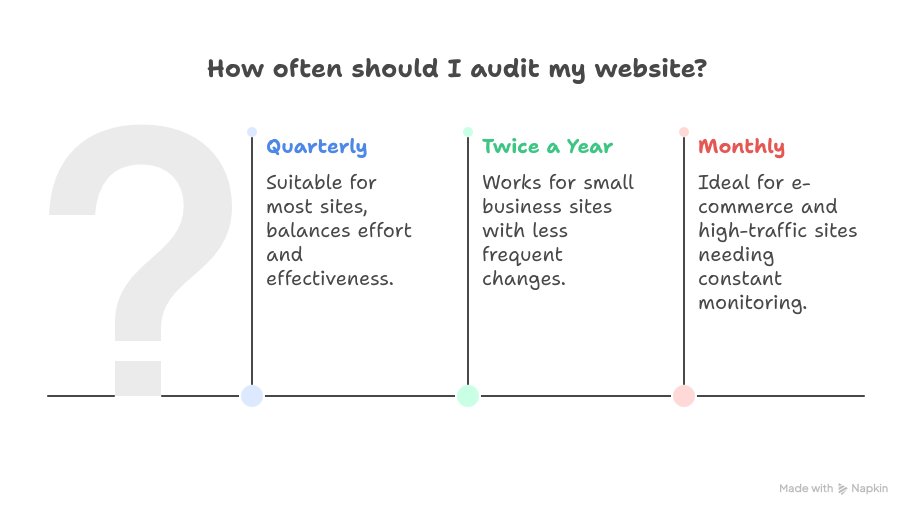
So, how often should you actually audit your site? The honest answer is: it depends on what your site does and how often it changes. But I can walk you through the realistic timelines that work for different types of businesses.
The General Rule: Quarterly Works for Most Sites
For the majority of business websites — especially those between 50 and a few hundred pages that update content semi-regularly — a quarterly technical audit makes sense. That’s once every three months.
This frequency catches problems before they pile up into ranking disasters. You spot broken links from content updates, identify pages that accidentally got deindexed, and keep your site structure from degrading as you add new pages or features.
Think of quarterly audits as preventive maintenance. You wouldn’t wait until your car completely breaks down to change the oil, right? Same principle.
Small Business Sites: Twice a Year Can Work
If you run a small business with a relatively static website with maybe 20 to 50 pages that don’t change much, then you can probably get away with auditing twice a year.
I’m talking about local service businesses, consultants, or companies that don’t publish regular blog content. Your site doesn’t evolve rapidly, so technical issues don’t accumulate as fast.
That said, you should still keep an eye on Google Search Console between audits. If you notice sudden ranking drops or indexing warnings, don’t wait for your scheduled audit, reach out for an SEO audit.
E-commerce and High-Traffic Sites: Monthly or Quarterly
E-commerce sites are a different beast entirely. You’re constantly adding products, updating inventory, tweaking category pages, and dealing with seasonal content. All of that creates opportunities for technical problems.
If your e-commerce site has hundreds or thousands of product pages, quarterly audits should be your minimum. Sites that add products weekly or run aggressive promotional campaigns often benefit from monthly technical reviews.
The same goes for high-traffic blogs or news sites. If you’re publishing daily or weekly, a monthly check helps you catch issues like duplicate content or internal linking problems before they hurt your visibility.
Content-Heavy Sites and Blogs: Monthly to Quarterly
Sites that regularly publish content, such as media sites, you would need more frequent attention. When you’re adding several posts per week, you can quickly run into problems with thin content, keyword cannibalization, or crawl budget waste.
For these sites, I recommend at least quarterly audits with monthly spot-checks on key metrics. Use Google Search Console weekly to monitor indexing status and catch crawl errors early.
When to Run an Immediate Audit (Don’t Wait)
Some situations demand an audit right away, regardless of your regular schedule:
After a website migration or redesign: this one’s critical. Migrations break things. Always audit immediately after going live to catch redirect issues, missing pages, or indexing problems before they cost you serious traffic.
Following a major Google algorithm update: if a core update hits and your rankings drop, you need to assess whether technical issues are part of the problem.
When you experience sudden traffic drops: a sharp decline in organic traffic often signals a technical problem.
Before and after major content updates: if you’re overhauling significant portions of your site content, audit beforehand to establish a baseline and afterward to ensure nothing broke.
After adding new functionality or plugins: new features can introduce technical issues. Site speed might tank, JavaScript rendering could break, or new code might block search engines from crawling important pages.
What Different Audit Types Look Like
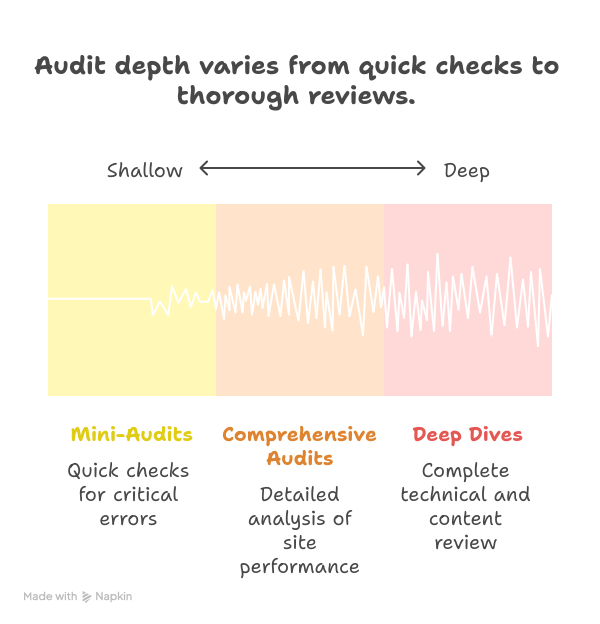
Not every audit needs to be a full-scale deep dive. You can adjust the depth based on your needs and timeline.
Monthly mini-audits focus on quick checks: indexation status in Search Console, broken links using a crawler tool and any critical errors flagged by your monitoring tools.
Quarterly comprehensive audits go deeper: full site crawls with tools like Screaming Frog, detailed analysis of redirect chains, duplicate content issues, internal linking structure, site speed and Core Web Vitals performance, mobile usability, and schema markup implementation.
Annual deep dives should cover everything. Technical infrastructure review, complete content audits to identify thin or outdated pages, competitor technical benchmarking, site architecture optimization, and a full review of your structured data and rich snippets.
The Cost of Skipping Regular Audits
I’ve worked with sites that went years without proper technical audits. The pattern is always the same: everything seems fine on the surface, but underneath, problems are compounding.
Broken internal links from deleted pages spread across your site. Old redirects turn into redirect chains that waste crawl budget and slow down page loads. Duplicate content issues multiply as your site grows. Pages you thought were indexed actually aren’t.
By the time these issues become obvious through traffic drops, you’re already losing money. Fixing accumulated problems takes way more time and effort than preventing them with regular maintenance.
Continuous Monitoring Between Audits
Here’s what I do between scheduled audits, and what I recommend to the businesses I work with:
Set up Google Search Console alerts and check weekly for new crawl errors, indexation issues, or security problems. Use an uptime monitoring service to catch site downtime immediately. Track your most important keyword rankings weekly to spot sudden drops that might signal technical issues.
Some SEO tools can run automated weekly site crawls and flag critical issues. If you’re managing a large site, this automation is worth the investment.
Matching Audit Frequency to Your Site’s Reality
Small, static site (under 50 pages, minimal updates): Every 6 months
Medium-sized business site (50-500 pages, regular updates): Every 3 months
E-commerce site or large blog (500+ pages, frequent changes): Every 1-3 months
Enterprise site (thousands of pages): Monthly technical reviews with quarterly deep audits
These aren’t rigid rules. They’re starting points. If your site falls between categories or your business has specific needs, adjust accordingly.
Get Your Technical Foundation Right
Technical SEO isn’t glamorous. It doesn’t give you the immediate satisfaction of seeing a new blog post rank or watching social shares climb. But it’s the foundation everything else sits on.
A site with technical issues constantly fights uphill battles no matter how good the content is.
If you’re not sure where your site stands, that’s a problem worth solving. Regular technical audits keep the machinery running smoothly so your content and marketing efforts can actually deliver results.
If you’d like me to audit your site and identify exactly what needs attention, get in touch. I’ll walk you through what’s working, what’s broken, and what you should prioritize first.
Leave a Reply